UPDATE — JULY 2026: IRCC'S REVIEW IS COMPLETE — MOST FLAGGED CERTIFICATES UPHELD
In June, IRCC asked a few dozen Bill C-3 certificate holders to surrender their certificates, then reversed most of those orders with revalidation letters — in several cases with no new documents required. On June 30 it completed a broader review of roughly 6,500 applications and began resuming the files it had paused. The eligibility law is unchanged — but the documentary standard is now stricter and permanent. These claims are won or lost on original-source documents. Build your file — or defend it — to that standard.
See where your file stands →
Bill C-3 · The Bjorkquist Decision · Canadian Citizenship by Descent

Are You Suddenly
Canadian?

Millions of Americans may now hold the right to Canadian citizenship — and don't know it. And some who received their certificates were briefly told to surrender them — before IRCC began reversing course. The episode showed how much the strength of your application matters. Attorney Terry Preshaw is ready to help.

Do I Qualify? Got a Suspension Letter?

One hour · Dual-licensed attorney · U.S. and Canadian immigration law since 1985

Photo: Terry T. Preshaw · Stawamus Chief, Squamish, BC

What June 2026 Taught · Updated July 22, 2026

After the Surrender Letters:
What the June 2026 Reversal Means for Your Claim

In mid-June 2026, IRCC asked a few dozen Bill C-3 certificate holders to surrender their certificates pending review — then, within days, began reversing many of those orders with revalidation letters, in several cases without requiring a single new document. On June 30, IRCC completed a broader review of roughly 6,500 applications — most flagged certificates were upheld, and the department conceded its own guidance had been unclear — and began resuming the applications it had paused. The acute crisis is over. What remains is a stricter, now-permanent documentary standard: whether you're applying for the first time or your file was flagged, how your documentary chain is built is everything. Here is the complete timeline.

June 30
Resolved
IRCC Completes Its Review — and Concedes Its Own Guidance Was Unclear

On June 30, 2026, IRCC announced it had completed its review of roughly 6,500 citizenship-by-descent applications filed under Bill C-3. Of those, 100 certificates had been flagged for potentially insufficient documentation; 33 were reinstated once IRCC confirmed the evidence already on file supported the claim, with the rest still under review. Notably, IRCC acknowledged that its own guidance on acceptable documentation had been unclear and may have contributed to certificates being issued without sufficient evidence — close to an admission that the problem lay in its process, not in applicants' entitlement. The department also said finalization of the paused applications would resume within days. The takeaway: the acute crisis is over and the eligibility law is untouched, but the documentary standard is now permanent — and files must be built to it.

June 19
Reversal
IRCC Reverses Course — Revalidation Letters Confirm the Certificates Stand

Within days of ordering surrenders, IRCC began issuing revalidation letters — dated June 19, 2026 and signed by the same Registrar who ordered the surrenders — confirming the reviewed certificates are valid and "shall not be cancelled" under subsection 26(4) of the Citizenship Regulations. (The letters carry a June 19 date; the reversal itself did not surface publicly until the following week, reported June 24–25.) Several recipients report submitting no new evidence: the same documents flagged days earlier as deficient were found sufficient on a second look. The broader review of the roughly 4,100 certificates issued under Bill C-3 continues, but for many the surrender demand has already been withdrawn.

June 18
IRCC
IRCC Pauses Processing and Says It Is "Reviewing How This Occurred"

Late on June 17, IRCC issued a statement — confirmed by The Canadian Press, though never posted publicly — saying it has temporarily paused finalizing some new Bill C-3 descent applications and is "reviewing how this occurred." By June 18 the picture sharpened: people who received surrender letters remain Canadian citizens while their files are reviewed and can keep working in Canada, but are being told they cannot use a Canadian passport during the review. The department's own decision to pause and self-review is telling — it points to a problem in IRCC's process, not in your application. Legal experts have also begun asking whether forcing the surrender of a status document before any finding has been made is even constitutional. The case for a strong, well-documented response has only grown.

June 17
CIT 0014
IRCC Formally Codifies the Stricter Checklist — In Writing

On June 17, IRCC formally updated its Document Checklist (CIT 0014), now stating at the top of the checklist that an application "cannot be supported solely by third-party records" and that documents must be "issued by the original authority." In plain terms, the standard the surrender letters had been enforcing since mid-June has now been written into the published checklist — the rule was applied first, and written down second. Two points still cut in applicants' favour: IRCC has not said whether this tightened standard applies retroactively to the roughly 82,000 applications already in the queue — the central fairness question for everyone who filed under the prior version — and the checklist still lists "any other evidence" as acceptable, so original-source documents are not the exclusive proof even now.

June 17
New
IRCC Has Also Paused Issuing New Bill C-3 Certificates

At the same time as sending suspension letters to existing certificate holders, IRCC temporarily paused finalizing new certificates under the Bill C-3 provisions while the review ran — freezing a queue then roughly 82,000 deep. IRCC has since said finalization is resuming (see June 30, above). But the pause stacked onto an already-surging backlog: the wait for a proof-of-citizenship certificate has climbed to about 19 months, with the queue now nearing 100,000. If your application is pending, a complete, correctly documented file is the best protection against further delay.

On June 23, 2026, Immigration Minister Lena Metlege Diab confirmed at a press conference that Canada has paused finalizing new citizenship-by-descent applications and is reviewing certificates already issued. Of those whose files clear that review, she said: "Those that are deemed to be okay are being told [they're] fine." (Reported by CIC News.)

June 17
Newsweek
IRCC's First Public Statement — Promises "Individualized Process"

In a statement to Newsweek — now covering this story internationally — IRCC said it is "aware that a limited number of people who obtained a citizenship certificate under C-3 have been notified that their file is under review," and that the purpose is to "determine, through an individualized process, whether the certificate was properly issued based on the evidence required by law." The phrase "individualized process" is significant — and will be held to account. A strong, well-documented legal response is how you take IRCC at their word.

June 17
Reddit
Thousands Organizing on Reddit — Frightened, Looking for Answers

A Reddit megathread has formed with thousands of concerned applicants and certificate holders pooling knowledge and trying to identify patterns. Users describe feeling "terrified" and "very confused" — many saying their documents were entirely legitimate. One user organized a cybersecurity analysis to verify the letters were genuinely from IRCC. This community is looking for exactly the kind of authoritative legal guidance this office provides.

June 16
Parliament
NDP Demands Minister Halt All Adverse Action — Class Action Discussed

NDP immigration critic Jenny Kwan sent an open letter to Immigration Minister Lena Metlege Diab demanding she reveal how many certificates were suspended and calling for an immediate halt to adverse action. Kwan stated publicly that people are "contemplating launching a legal challenge and potentially a class-action lawsuit." Conservative immigration critic Michelle Rempel Garner also pressed the Minister in Question Period. The Minister characterized the suspensions as affecting only "a limited number" of people.

June 16
Media
International Coverage: Newsweek, CBC, TechTimes, Yahoo News, Canadian Press, CP24

The story has gone fully international. TechTimes headlines it as "Canada Claws Back Citizenship Certificates From Hundreds Who Used Genealogy Sites." Newsweek, Yahoo News, and dozens of immigration news outlets are covering it. Experienced immigration lawyers quoted across coverage — including attorneys with 38 years of practice — say they have never seen anything like this. Multiple lawyers expect Federal Court judicial review applications to follow.

May 26
Key Fact
IRCC Told Parliament Alternative Evidence Is Acceptable — Weeks Before Sending the Letters

In a response tabled in the House of Commons on May 26, 2026, IRCC itself confirmed that where a formal birth certificate is unavailable, alternative evidence assessed on a balance of probabilities is acceptable — including hospital records, baptismal certificates, census records, and boat manifests. This statement, made weeks before the suspension letters were sent, directly contradicts the stated basis for the suspensions. It is central to every legal response this office prepares.

Legal
Foundation
Federal Court Precedent Strongly Supports Certificate Holders

IRCC's own document checklist (CIT 0014, version 12-2025) expressly permits "any other evidence" of a parent's Canadian citizenship. The Federal Court held in Thompson v. Canada (2021 FC 914) that applicants are entitled to rely on IRCC's published guidance. This was reaffirmed in Somers-Edgar v. Canada (2026 FC 417) directly in the Bill C-3 context. Any cancellation must satisfy the Vavilov (2019 SCC 65) reasonableness standard. IRCC cannot publicly tell Parliament that census records are acceptable while simultaneously demanding certificates back from people who submitted exactly those records.

Read the full analysis: “They Blinked — and Still Won’t Say Why” →

What This Means for You

If You're Exploring or Applying for the First Time

The June episode is the clearest possible argument for building your application correctly from day one — original-source records for every generation, an unbroken documentary chain, and a written account of any record that genuinely cannot be obtained. Files built to that standard are the ones that survive review. This is where experienced counsel saves you the most: getting it right the first time is faster, cheaper, and safer than fixing it under pressure later.

If Your File Was Flagged or You Received a Letter

You are most likely still a Canadian citizen while your file is reviewed, and many surrender orders are now being reversed. But "most likely" isn't "certainly," the broader review is ongoing, and how you respond still matters. Do not surrender anything or reply to IRCC before you've had your situation reviewed.

Exploring or Applying?

Eligibility Consultation

$425

Assess whether you have a viable claim, trace your Canadian anchor ancestor, and build your application to the original-source standard from the start — before the backlog grows further.

Book Eligibility Consultation →
One hour · By phone or video
Flagged or Received a Letter?

Review Consultation

$425

If your file was flagged or you received a surrender letter, we'll review exactly where you stand, what the reversal means for you, and how to respond. Appointments available this week.

Book Review Consultation →
Appointments available this week

Exclusive Analysis · Updated June 18, 2026

The Goalposts Moved — In Writing

IRCC says the people who received surrender letters failed to supply documents from “original source” authorities. So this office did something simple: we compared IRCC’s own Document Checklist (CIT 0014) — the published document that tells applicants what evidence to provide — before and after the suspension wave, line by line.

The Citizenship Act did not change. The checklist did — and the requirement IRCC is now enforcing was added to it after these certificates were issued. Here is exactly what changed.

CIT 0014 (12-2025)The version in force when applicants filed
CIT 0014 (06-2026)The version IRCC posted during the suspensions
1 · Which office must issue the record
“… issued by the appropriate authority.” (every birth-certificate scenario)
“… issued by the original authority.”
2 · Records from genealogy / third-party sources
No such restriction appears anywhere in the checklist.
New sentence added: “Your application cannot be supported solely by third-party records.”
3 · How much of the family line you must prove
“proof that at least one of your parents is a Canadian citizen, such as …” — an illustrative list
“proof of parentage and Canadian citizenship for your parent, grandparent and ancestor … you must provide 1 or more of the following documents issued by the original authority— now mandatory, generation by generation

Based on a line-by-line comparison of the two official versions of IRCC’s checklist, CIT 0014 (12-2025) and CIT 0014 (06-2026), prepared by this office.

Read the full analysis →

You filed under the old checklist

You are entitled to rely on IRCC’s published instructions as they read on the day you applied — not on a stricter version posted months later.

Originals were never mandatory

Even the new checklist keeps the permissive “any other evidence” language. IRCC did not make original-source documents the only acceptable proof — in either version.

The edit is itself evidence

If the December checklist had already required original-source, generation-by-generation proof, there would have been nothing to tighten in June.

Your response can put this contradiction in front of IRCC

A surrender-letter response built on IRCC’s own changed checklist — and on the precedents and Parliamentary statements that protect applicants who relied on the rules as written — is your most powerful immediate tool.

Book $425 Review Consultation →
Frequently Asked Questions

Your Questions Answered

Whether you're exploring whether you have a claim to Canadian citizenship by descent, or you received a letter from IRCC about your certificate, these are the questions people ask most.

How do I know if I might qualify for Canadian citizenship by descent?
The key is whether you have a Canadian ancestor — a parent, grandparent, or earlier — and an unbroken line of descent connecting you to them. Bill C-3 removed the first-generation limit that previously cut off many of these claims, so people who were told years ago that they did not qualify may now be eligible. The surest way to know is to look at your specific family line, which is exactly what an eligibility consultation is for.
What documents will I need to apply?
In general, you will need records establishing each link in the chain from your Canadian ancestor down to you — birth certificates, and marriage certificates where surnames change — plus proof of your ancestor's connection to Canada. These should be original-source records from the issuing authority (a vital-statistics office or archive), not genealogy-website printouts alone. Part of the consultation is identifying exactly which documents your line requires and which you may still need to order, since some can take weeks to arrive.
How long does the application process take?
Processing times are set by IRCC, not this office, and they have risen sharply — the published wait for a proof-of-citizenship certificate is now about 19 months, with the queue nearing 100,000. IRCC paused finalizations during its June review and has said processing is resuming. The best protection against delay is a complete, correctly documented application from the start, which is far less likely to be flagged or returned for more evidence. We will give you a realistic picture for your situation during your consultation.
Does the suspension letter mean I am not a Canadian citizen?
No — and this is the most important thing to understand. The letter suspends your certificate — the document that proves citizenship — while IRCC reviews your file. It is not a declaration that you are not Canadian. Your underlying citizenship, if validly held, is not extinguished by a demand to return a piece of paper. You remain a Canadian citizen unless and until a formal Ministerial decision to the contrary is issued — and even then you have the right to challenge it.
Do I have to surrender my certificate?
Section 26(1) of the Citizenship Regulations imposes a legal obligation to comply "forthwith" with a surrender demand. Non-compliance is a summary conviction offence under the Citizenship Act — a criminal matter carrying potential fines and imprisonment, though less serious than an indictable offence. The surrender demand itself is not a court order, and prosecution for non-compliance by a good-faith citizenship claimant actively contesting entitlement through proper legal channels would be extraordinary in this context. Client must obtain Canadian legal advice specific to his/her situation from a Canadian lawyer.
I used Ancestry.com records. Am I at risk for losing my Certificate of Citizenship or not being approved?
Possibly — but not necessarily. IRCC's own CIT 0014 checklist expressly permits "any other evidence." The critical distinction is whether your Ancestry records included metadata from the original source rather than just a screenshot. Thompson and Somers-Edgar support your position.
My application is still pending — am I affected by the pause?
The pause was temporary. IRCC paused finalizing new Bill C-3 certificates during its June review, then said on June 30 that the review was complete and finalization would resume. Your file was not cancelled — but it did sit behind a growing backlog, and the wait is now roughly 19 months with the queue nearing 100,000. This does not mean your application will be denied; it means the timeline is long and a correctly documented file is your best protection against further delay. A consultation can help you understand your position and what, if anything, you can do proactively.
Can I fight the suspension letter?
Yes — and there are strong legal arguments available. The suspension letter invites you to submit additional documentary evidence. A well-crafted legal response asserting the CIT 0014 permissive checklist language, the Thompson and Somers-Edgar precedents, and IRCC's own May 26, 2026 House of Commons statement is your most powerful immediate tool. If IRCC proceeds to cancel without engaging with the arguments, judicial review before the Federal Court of Canada is available. This office prepares comprehensive response packages for suspension cases.
What is the class action I'm reading about?
NDP immigration critic Jenny Kwan stated publicly on June 16, 2026 that some affected holders were "contemplating launching a legal challenge and potentially a class-action lawsuit." As of late June 2026, no class action has been formally filed, and many of the surrender orders have since been reversed. A class action would seek systemic relief, but it does not replace individual legal advice on your specific file. If you received a letter with a response date, address your own file directly rather than waiting on a class action.
I already surrendered my certificate. What now?
Surrendering the certificate does not forfeit your citizenship or your right to contest the review. You can still submit a comprehensive written response with supplementary evidence. If the review finds you are entitled, Section 26(4) of the Citizenship Regulations requires IRCC to return the certificate forthwith. Contact this office — we can prepare a response on your behalf regardless of whether you have already surrendered.
I have a Canadian passport. Does the suspension affect it?
The suspension targets the certificate, not the passport directly. However, if IRCC ultimately cancels the certificate, that could have implications for passport validity. If you have received a Canadian passport based on Bill C-3 and have a pending trip, seek Canadian legal advice from a Canadian lawyer immediately.
Why did IRCC approve my application if the documents were not good enough?
That is exactly the right question — and the heart of the legal argument. Immigration lawyer Lisa Middlemiss put it plainly: "If IRCC had concerns about the documents, it should have investigated before issuing a certificate." IRCC approved your file under one evidentiary standard and is now applying a stricter one retroactively. Canadian administrative law — particularly the Vavilov reasonableness standard and the legitimate expectation doctrine — provides real protection against exactly this kind of retroactive goal-post shifting.
Why do I need a lawyer licensed in Canada specifically?
Canadian citizenship law is governed by Canadian federal statutes and interpreted by Canadian courts. Terry Preshaw holds active bar membership in both Washington State (1988) and the Law Society of British Columbia (No. 7787, called 1985) — one of the few attorneys practicing in the United States with that dual credential. She has been practicing Canadian Immigration and Nationality law since 1985 — over FOUR DECADES of experience.
Don't see your question here? Book a consultation and ask Terry directly.

Book $425 Review Consultation → Book $425 Eligibility Consultation →
Citizenship by Descent

You Might Be Canadian
Without Knowing It

Until recently, Canadian citizenship passed directly only to the first generation born outside Canada — meaning millions of people were cut off from their birthright. The Bjorkquist decision and the passage of Bill C-3 changed that permanently. If any of the following apply to you, you may have a claim worth exploring:

🍁

Your parent was born in Canada

You may be entitled to Canadian citizenship by descent, even if you were born and raised entirely in the United States.

🍁

Your grandparent was born in Canada

Bill C-3 abolished the first-generation limit retroactively. The chain of citizenship can now extend further than the old law ever allowed.

🍁

You were previously told you didn't qualify

If you were assessed under the old rules, your situation deserves a fresh look. The law changed significantly in December 2025.

🍁

You were born abroad to a Canadian parent before 1947

Historical exclusions under the old Citizenship Act have been addressed. Many previously ineligible individuals now have a clear path forward.

The Law That Changed Everything

The Bjorkquist Decision
and Bill C-3

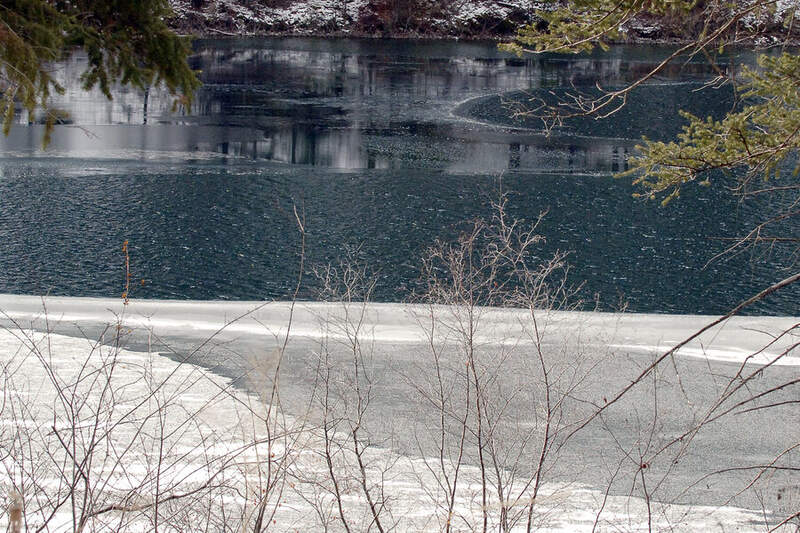
Winter river in British Columbia — photograph by Terry T. Preshaw

For decades, Canadian law limited citizenship by descent to a single generation born outside Canada. If your Canadian-born parent gave birth to you outside Canada, and you then had children abroad, those grandchildren were denied citizenship entirely. This was known as the "first-generation limit."

In December 2023, the Ontario Superior Court of Justice found that the first-generation limit violated the Canadian Charter of Rights and Freedoms — creating unequal classes of Canadians based solely on where their parents were born.

Bjorkquist et al. v. Attorney General of Canada · Ontario Superior Court of Justice

Parliament responded with Bill C-3, which received Royal Assent on November 20, 2025, and came into force on December 15, 2025. For anyone born before that date who was excluded solely by the first-generation limit, citizenship is now recognized automatically — retroactively to birth. By operation of law, you were always Canadian. No test, no threshold.

For children born or adopted outside Canada on or after December 15, 2025 to a Canadian parent who was also born abroad, a new "substantial connection" test applies: the Canadian parent must demonstrate at least 1,095 cumulative days of physical presence in Canada before the child's birth or adoption.

In either case, you must apply to IRCC for a Canadian Certificate of Citizenship — the official document that serves as proof of your Canadian status. Professional guidance from an experienced attorney licensed in Canada will give you confidence in proceeding.

Snow-capped mountains in British Columbia — photograph by Terry T. Preshaw
Your Attorney

Why Terry T. Preshaw

40+
Years of Practice
Cross-border immigration experience spanning four decades and two legal systems.
2
Bar Admissions
One of the only attorneys in the U.S. licensed to practice both Canadian and American immigration law.
1985
Called to the BC Bar
Admitted to the Law Society of British Columbia before most of today's immigration attorneys finished high school.
Terry T. Preshaw, J.D. Bald eagle — photograph by Terry T. Preshaw

Terry T. Preshaw, J.D., has spent her entire career at the intersection of United States and Canadian immigration law. Based in Everett, Washington — just south of the border — she has guided individuals, families, and businesses through the complexities of cross-border legal status since 1985.

When Bill C-3 came into force in December 2025, Terry was ready. She had been following the Bjorkquist litigation closely, and immediately began helping clients assess and pursue their citizenship claims. She has organized community seminars, spoken with regional media, and built a caseload focused on this new wave of Canadian citizenship by descent.

She practices as a sole practitioner — which means when you book a consultation with Terry Preshaw, you speak with Terry Preshaw.

🇨🇦
Law Society of British ColumbiaMember No. 7787 · Called 1985
🇺🇸
Washington State Bar AssociationLicensed 1988
⚖️
Law Offices of Terry T. Preshaw, P.S.2727 Oakes Avenue, Suite 200 · Everett, WA 98201
🏛️
American Immigration Lawyers AssociationAILA Member
The Process

How Your Claim Works

Canadian citizenship by descent is not self-executing — it requires a formal application to IRCC. Here is how Terry guides you through it.

1

Book Your Consultation

A one-hour session to assess your eligibility, review your family history, identify the documents you need, and chart a clear path forward.

2

Gather Your Evidence

Terry guides you through the specific documentation IRCC requires — birth records, naturalization certificates, family history — and reviews everything before submission.

3

File and Follow Through

Terry prepares and submits your application, monitors its progress, and responds to any IRCC requests for additional information on your behalf.

Ready to Find Out
If You're Canadian?

Book a one-hour consultation with Terry T. Preshaw. Come with your family history and your questions. Leave with a clear picture of where you stand and what comes next.

$425
One-Hour Consultation · Prepaid at Booking
Book Your Consultation

Prefer to talk first? Call 425-259-1807  ·  Prefer email? [email protected]